Gamification and democratization of trading processes are probably the most controversial and, therefore, the most discussed trends in the financial industry today. Even large world-famous dailies such as the New York Times release special articles about topical brokerages like Robinhood, Binance, and so on. Even then, there is no common approach to understanding gamification either in these papers or within the expert community of the industry.
There are other vital questions. Should we agree gamification is a part of the democratization of trading? Or, on the contrary, the democratization of trading has become a byproduct of brokers’ aim to make the trading process simpler and more interactive? Let’s try to make it clear.
There are three general ways to understand “gamification”.
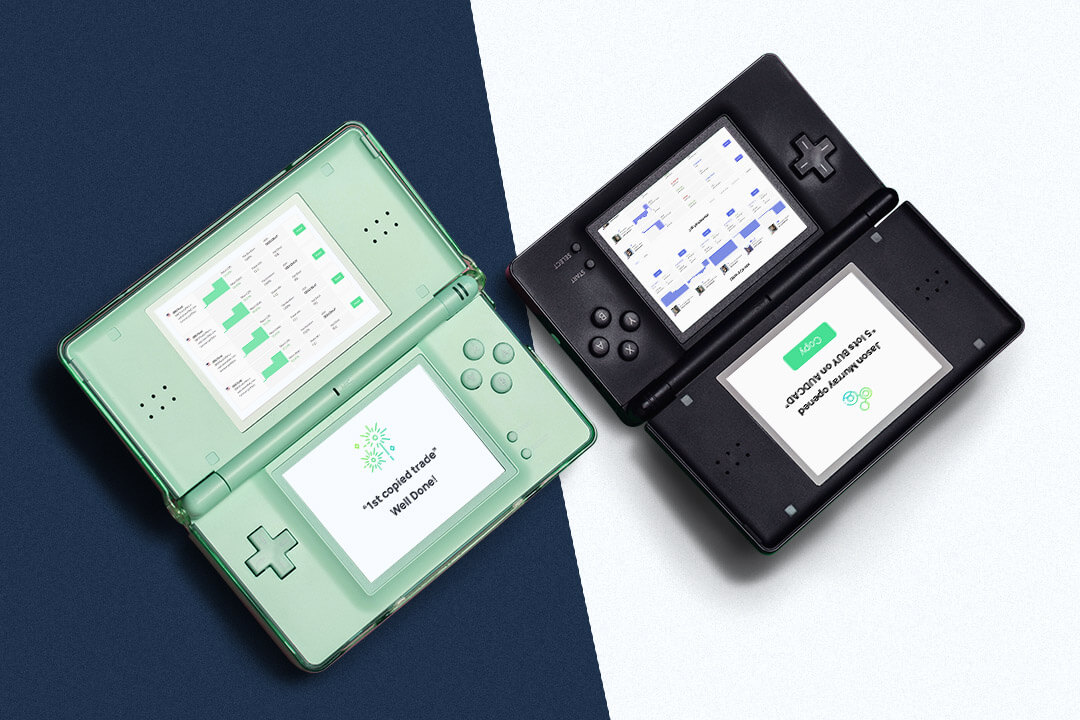
The first one, or the “basic” approach, is used when we mention the most popular and ordinary forms of gamification, such as traders’ competitions, implementation of special badges for traders to highlight their achievements in trading, etc. Improved notification systems, with messages like, “your friend has just closed a profitable deal on BTCUSD”, can also be treated as a manifestation of the gamification trend. Therefore, “basic” gamification aims to keep users’ attention on the platform and entice them to trade more using various features.
The second, or the “educational” approach, is contrasting to the first one. Even though it also focuses on clients’ attention, its main goal is to attract them to the trading platform’s tutorials and educational programs. Expressed through special offers, for example, “close the first deal and get a $5 bonus”, these features help newcomers to get used to functionality, learn the basics of trading, and prevent unwanted losses. Noticeably that not only do brokers use gamification tools to increase their clients’ knowledge and skills, but it is also popular among bank mobile apps and services that also provide investment opportunities.
How democratization and gamification are connected?
The third way to understand gamification is to interpret it as a part of “democratization”. Traditionally, democratization can manifest itself by introducing unique instruments like synthetic symbols or micro-lots that attract users’ attention. Tightly connected with the symbols’ fractionalization, increasing availability of trading among non-professional traders is usually treated as a threat to the reputation of the whole industry. While starting requirements decrease, lots become smaller, and traders more actively use risky strategies, which makes the trading process appear more like a game than a serious endeavour with elaborate analysis. This is a key aspect of the criticism of the gamification trend.
What is the difference between democratization and gamification?
Democratization affects starting requirements, whereas gamification influences a trading process. While gamification’s goal is to keep users’ attention and entice them to keep on trading on the platform, democratization focuses on ways to engage the maximum possible number of investors. Despite differences in their concepts and mechanics, they also complement each other, as in the third described approach. Understanding, combining, and using them can help brokers prepare for coming changes that are unavoidably emerging in the trading industry.